






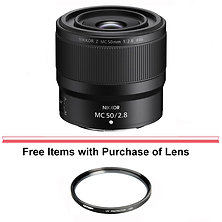
What Are Macro Lenses?
Macro lenses deliver exceptional detail and magnification for close-up photography, enabling photographers to capture intricate subjects like insects, flowers, and jewelry with remarkable clarity. With 1:1 magnification and specialized optics, macro lenses excel at isolating small subjects from their backgrounds while maintaining sharp focus throughout the image. Whether you're exploring nature photography, product documentation, or scientific imaging, macro lenses transform the way you see fine details.
Macro lenses are precision optical tools designed specifically for close-focusing photography, with magnification ratios that reach 1:1 (or greater in some cases), meaning the image formed on the camera sensor is the same size as the actual subject. This makes macro lenses ideal for revealing texture, pattern, and detail invisible to the naked eye. Unlike standard lenses that focus at distances of several feet or more, macro lenses can focus at working distances of just a few inches, allowing you to fill the frame with tiny subjects.
The optical design of macro lenses addresses the challenges of extreme close focusing. They feature precise internal elements, extended barrel designs, and flat field correction to maintain focus sharpness across the entire image, even at shallow depths of field. Macro lenses come in various focal lengths ranging from 50mm to 200mm, with longer focal lengths offering greater working distance between the front element and your subject, reducing shadows and allowing easier lighting setup during macro photography.
Focal Lengths and Working Distance
Choosing the right macro lens focal length depends on your subject and lighting preferences. Short macro focal lengths, typically 50-60mm, provide the closest physical proximity to your subject, useful for controlled studio work with reflective or heat-sensitive items. Mid-range macro lenses between 90-105mm offer a practical balance, giving you enough working distance to position lights and reflectors while still achieving high magnification.
Longer macro lenses, from 150-200mm, maximize the distance between your front lens element and the subject. This extended working distance proves invaluable in field photography, allowing you to photograph skittish insects and fragile flowers without disturbing them. The extra distance also simplifies lighting setup and reduces the lens shadow cast onto your subject. Many macro photographers combine longer focal length lenses with tripod support for precise positioning.
- 50-60mm macro lenses: closest working distance, ideal for controlled studio environments
- 90-105mm macro lenses: versatile middle ground with practical working distance for most subjects
- 150-200mm macro lenses: extended working distance for field work and wildlife close-ups
Macro Lens Features to Consider
When evaluating macro lenses, examine aperture range, autofocus performance, and vibration control. Most macro lenses range from f/2.8 to f/4 at maximum aperture. A faster f/2.8 aperture provides more light for autofocus and handheld shooting, though macro work often uses smaller apertures to extend the in-focus zone. Internal focusing designs maintain a constant front element position, useful when using lens filters or positioning reflectors and diffusers.
- Autofocus motors with internal focusing mechanisms for consistent lens length
- Vibration control or image stabilization for sharper handheld macro shots
- Sealed optical and mechanical construction for durability in wet outdoor environments
- Multi-element optical design with aspherical elements for edge-to-edge sharpness
Macro Lenses Across Camera Systems
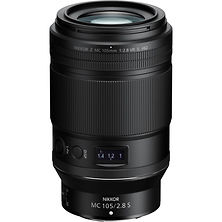
Canon offers macro lenses across its EF, RF mount systems with options like the RF 100mm f/2.8 Macro and EF-series alternatives. Sony E-mount users benefit from dedicated macro lenses including the FE 90mm f/2.8 Macro and 50mm f/2.8 Macro models. Nikon macro lenses span the Z-mount and F-mount ecosystems, with options like the Z MC 105mm f/2.8 Macro and F-mount alternatives for DSLRs.
Third-party manufacturers provide excellent macro alternatives. Sigma and Tamron develop dedicated macro lenses for Canon, Nikon, and Sony systems with optical designs optimized for macro photography, often delivering exceptional performance and value.
Who Uses Macro Lenses
Nature photographers rely on macro lenses for botanical and wildlife work, capturing intricate flower structures and insects with working distances that prevent disturbance. Product photographers use macro lenses for jewelry, electronics, and premium product documentation, revealing texture and fine details essential for e-commerce. When paired with continuous lighting setups, macro lenses enable precise control over highlights and shadows. Hobbyist photographers explore macro photography as a creative discipline, discovering visual richness in everyday subjects through manual focusing and depth of field control.
Frequently Asked Questions
What is the difference between macro and standard telephoto lenses?
Standard lenses focus at typical distances of several feet or more and achieve magnification ratios of less than 1:4. Macro lenses reach magnification ratios of 1:1 or greater, focusing at extremely close distances measured in inches rather than feet. This specialized optical design enables macro lenses to fill the frame with tiny subjects while maintaining optical sharpness across the image.
Can I use extension tubes with macro lenses?
Yes. Extension tubes achieve magnification ratios beyond 1:1, reaching 2:1 or greater. Quality extension tubes maintain autofocus and metering communication between lens and body. Check compatibility with your specific macro lens model.
What depth of field should I expect when shooting macro lenses?
Macro lenses deliver very shallow depth of field, especially when focused at close distances. At 1:1 magnification with a macro lens at f/2.8, the in-focus zone may measure only fractions of an inch. Photographers typically stop down to f/8 or f/16 to extend the in-focus zone, often using focus-stacking techniques to combine multiple exposures for complete subject sharpness. External focus accessories and focusing rails simplify precision focus work in final images.
Do macro lenses work well for general photography or portraiture?
Macro lenses function at normal focusing distances though optimized for close work. Short 50-60mm models work acceptably for general photography. Longer 105mm macro lenses offer flattering portrait focal lengths with pleasant background compression, though they prioritize close-focus performance over general versatility.
Which focal length macro lens should I choose for starting out?
A 90-105mm macro lens represents an excellent starting point, offering practical working distance for flowers and insects with utility for general photography. This focal length provides adequate separation for lighting and reflector positioning while remaining manageable for handheld shooting.
Do I need vibration control in a macro lens?
Vibration control assists handheld macro shooting, extending usable shutter speeds. Tripod-mounted work doesn't require it, but it helps field photography where handheld macro work demands slower shutter speeds. For tripod work, a remote shutter release or intervalometer helps eliminate camera shake during long macro exposures.
Shop Macro Lenses at Samy's Camera
Macro lenses reveal a world of detail waiting to be discovered through your camera. Whether you pursue botanical photography, product documentation, or nature exploration, Samy's Camera stocks macro lenses across all major platforms from Canon, Nikon, Sony, Tamron and Sigma. Pair your macro lens with lens accessories including extension tubes, macro focusing rails, and precision focus helpers for optimal results. Explore filter accessories like close-up extension rings and macro-specific solutions. Visit Samy's Camera online or at a local store to explore macro lens options, speak with experienced staff about your specific macro photography goals, and find the right optics for your creative vision.